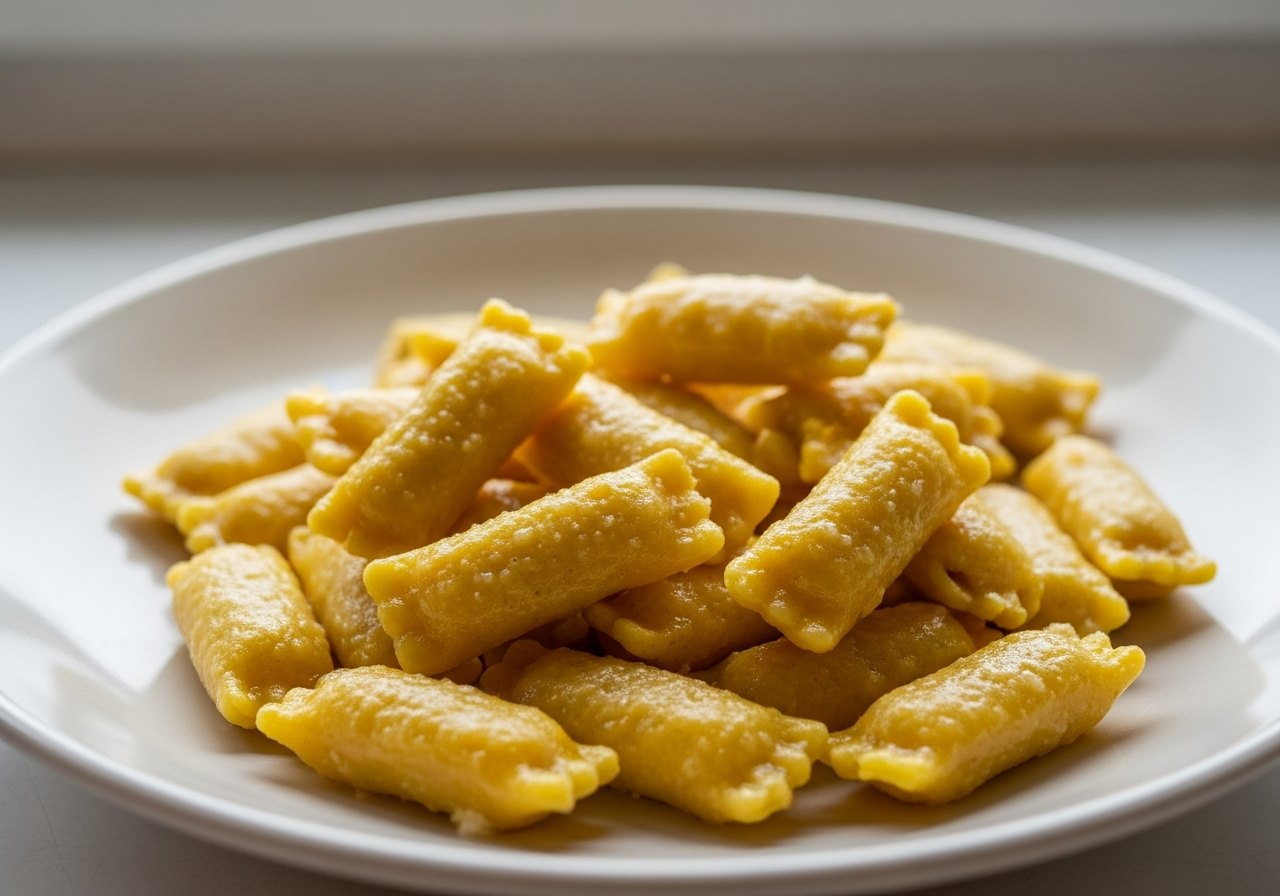
Small Bakes

Pasticciotti (Pugliese Custard Pastries)

Golden, creamy Puglian pasticciotti: a taste of Italian sunshine in every delightful bite.

Pasticciotti (Pugliese Custard Pastries)
Pasticciotti (Pugliese Custard Pastries) — made and photographed at home.

Pasticciotti hold a special place in the heart of Puglia, the sun-drenched heel of Italy. These exquisite little pastries, bursting with creamy custard, are a staple from Lecce to Gallipoli, often enjoyed as a morning treat with a strong espresso. Each bite transports you to the bustling piazzas and ancient streets of this beautiful region, a true taste of Salentine hospitality.

What makes pasticciotti truly magical is the delightful contrast between the crisp, buttery shortcrust pastry and the velvety smooth, lemon-scented crema pasticcera. While seemingly simple, the careful balance of textures and flavours is what elevates them beyond a mere sweet. They embody the Italian philosophy of using a few high-quality ingredients to create something truly extraordinary.

The Art of Crema Pasticcera

The heart of a perfect pasticciotto lies in its crema pasticcera, or pastry cream. This classic Italian custard must be rich, smooth, and utterly delicious. We'll infuse ours with fresh lemon zest, a traditional touch that brightens the custard and adds a subtle, fragrant counterpoint to its sweetness.

Achieving the ideal consistency is key: it should be thick enough to hold its shape when baked, yet still wonderfully creamy on the palate. Patience is a virtue here; gentle, continuous stirring over a moderate heat ensures a lump-free, silky custard that will bake beautifully inside the pastry shell.
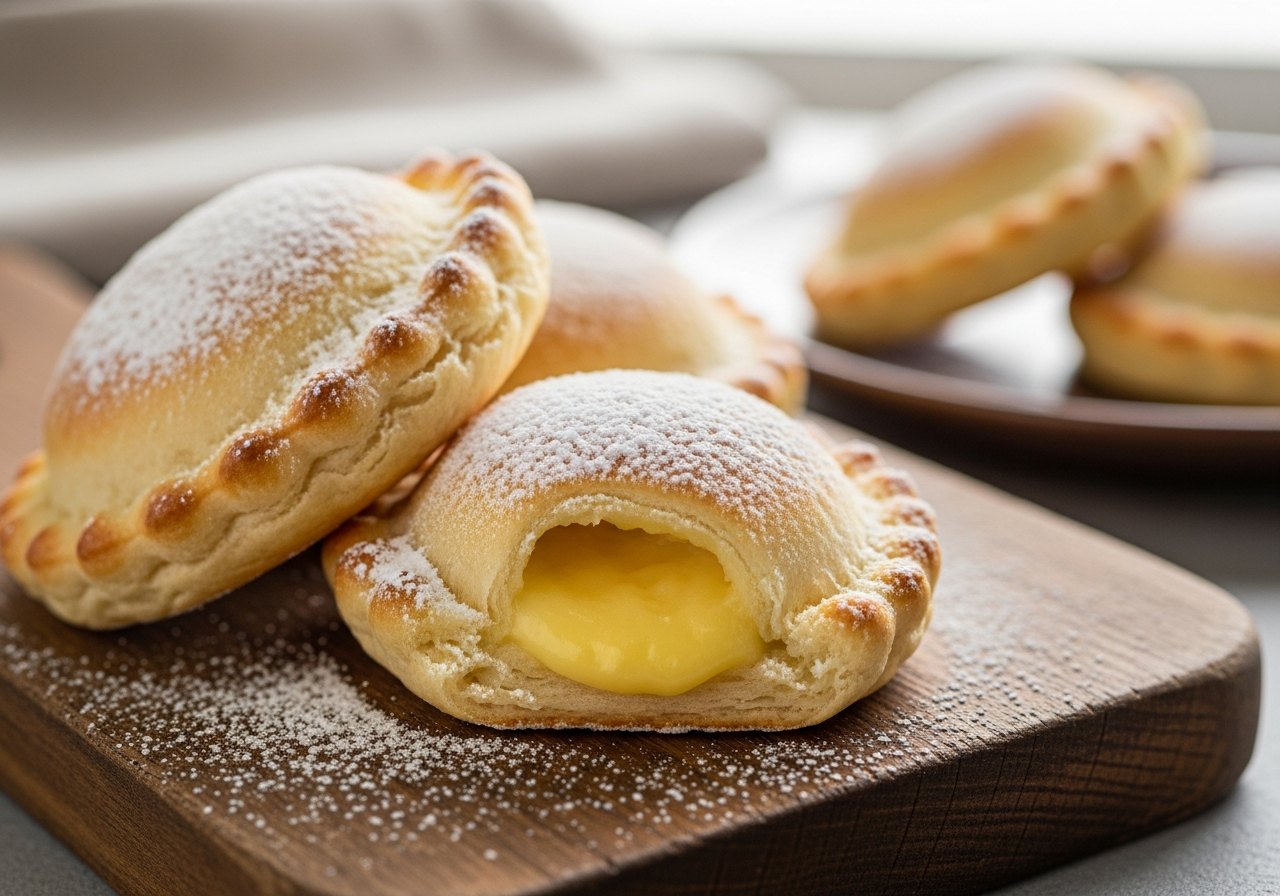
The Art of Crema Pasticcera

Crafting the Perfect Pastry Shell

The pastry for pasticciotti is a delicate shortcrust, often enriched with egg yolks for a tender, golden finish. It needs to be sturdy enough to encase the generous filling, yet crumbly and melt-in-the-mouth once baked. The secret is to work the dough minimally to prevent gluten development, ensuring a tender result.

Rolling the dough to the correct thickness is crucial for that characteristic Pasticciotto bite. Not too thick to be dense, not too thin to break. The traditional oval shape is achieved by cutting circles, then gently stretching and shaping them in specific moulds, creating the iconic, slightly domed top.

Nonna's tip

For extra flavour, allow your crema pasticcera to chill completely overnight before assembling the pasticciotti. This deepens the lemon flavour and ensures the custard sets perfectly, preventing any weeping during baking.
Recipe Card

Pasticciotti (Pugliese Custard Pastries)

These delightful Puglian pasticciotti feature tender shortcrust pastry filled with a luscious, lemon-infused vanilla custard, baked to golden perfection.

Prep
45 min
Cook
25 min
Chill
2 hr
Total
1 hr 10 min
Serves
8
Level
Medium
Ingredients
  • 250g (2 cups) plain flour
  • 125g (1/2 cup + 1 tbsp) unsalted butter, cold and cubed
  • 75g (1/3 cup) caster sugar
  • 1 large egg yolk
  • 1 whole egg (for brushing)
  • Pinch of salt
  • 1-2 tbsp cold water (if needed)
  • 500ml (2 cups) full-fat milk
  • 100g (1/2 cup) caster sugar
  • 50g (1/3 cup + 1 tbsp) plain flour
  • 3 large egg yolks
  • Zest of 1 unwaxed lemon
  • 1 tsp vanilla extract
Method
  1. First, prepare the crema pasticcera: gently heat the milk with lemon zest in a saucepan until just simmering, then remove from heat and let it infuse for 10 minutes.

  2. In a separate bowl, whisk together the egg yolks, sugar, and flour until pale and creamy.

  3. Gradually pour the warm, infused milk (straining out zest if preferred) into the egg mixture, whisking constantly until smooth, then return the mixture to the saucepan. Cook over medium heat, stirring continuously, until the custard thickens to a rich, pipeable consistency; stir in vanilla extract, then transfer to a bowl, cover with clingfilm touching the surface, and chill for at least 2 hours.

  4. For the pastry, combine flour, sugar, and salt in a large bowl, then rub in the cold butter with your fingertips until it resembles coarse breadcrumbs. Add the egg yolk and mix until a dough forms, adding a tablespoon of cold water if needed, then flatten into a disc, wrap, and chill for at least 30 minutes.

  5. Preheat your oven to 180C (160C fan/Gas 4) and lightly grease 8 oval pasticciotti moulds or a muffin tin. Roll out half the chilled pastry on a lightly floured surface to about 3mm thick, then cut out circles large enough to line your moulds, pressing them gently into place and trimming any excess.

  6. Spoon or pipe a generous amount of the chilled custard into each pastry-lined mould, leaving a small border at the top.

  7. Roll out the remaining pastry, cut out slightly smaller circles or oval tops, then place them over the custard, pressing the edges firmly to seal and trimming any overhang. Brush the tops with beaten egg for a golden finish.

  8. Bake for 25-30 minutes, or until the pasticciotti are deeply golden brown. Let them cool in the moulds for 5-10 minutes before carefully turning them out onto a wire rack to cool completely.

Nutrition (per serving)
350
Calories
20 g
Fat
35 g
Carbs
7 g
Protein
22 g
Sugar
Notes
  • Store pasticciotti in an airtight container at room temperature for up to 2 days, or in the refrigerator for up to 4 days.
  • Serve slightly warm or at room temperature, perhaps dusted with a little icing sugar, alongside coffee or as a delightful dessert.
Good to know

Frequently asked

Why is my custard lumpy?

Lumps usually form from uneven heating or not stirring constantly. Ensure you whisk continuously over medium heat and temper the eggs properly by gradually adding warm milk.

My pastry is too tough, what went wrong?

Tough pastry often results from overworking the dough. Handle the pastry minimally and only until it just comes together to keep it tender and crumbly.

Can I make pasticciotti ahead of time?

Yes, you can prepare the pastry and custard a day in advance and store them separately in the refrigerator. Assemble and bake just before serving for the best texture.