Small Bakes

Bomboloni (Italian Doughnuts)

Indulge in these fluffy, golden Italian doughnuts, perfectly fried and dusted with sugar for a taste of pure joy.

Bomboloni (Italian Doughnuts)
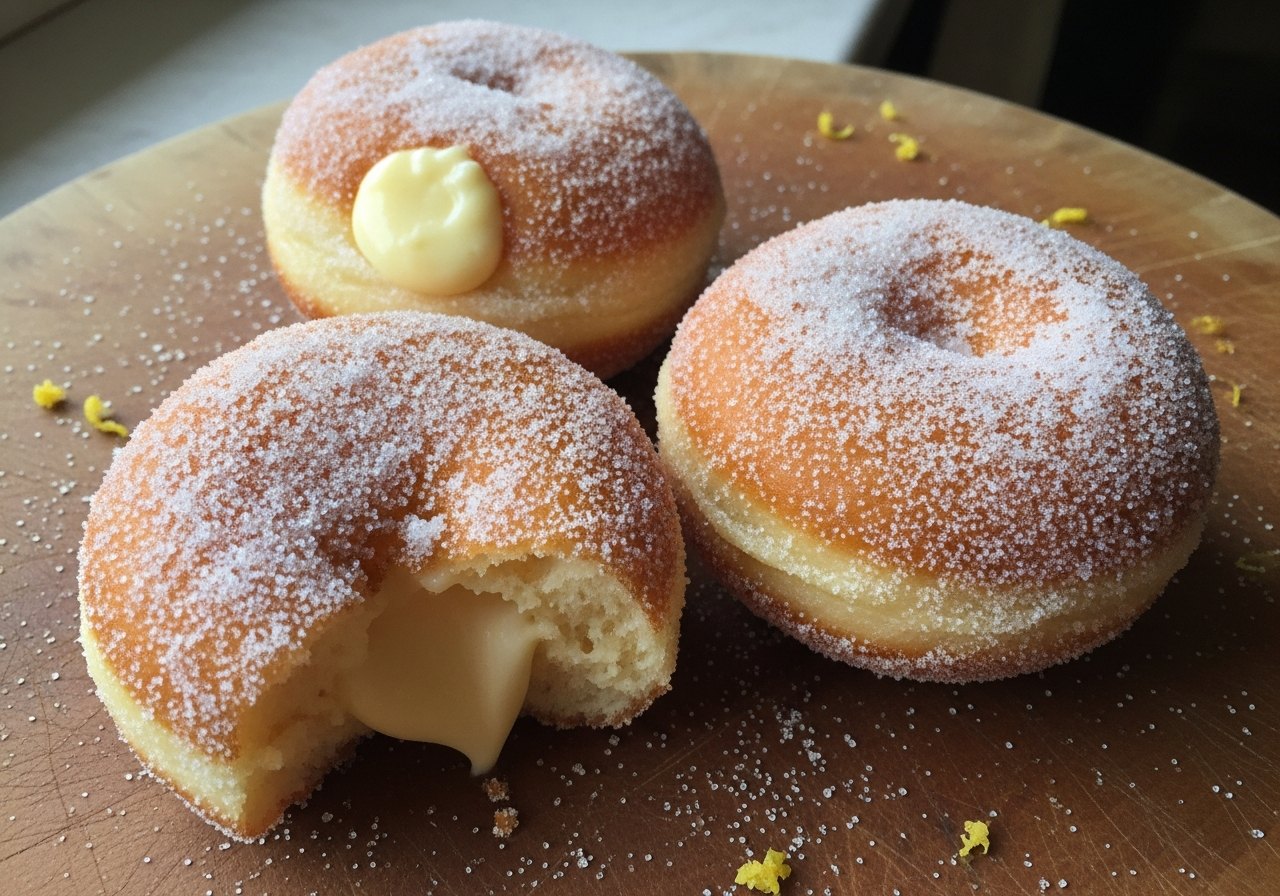
Bomboloni (Italian Doughnuts) — made and photographed at home.

Ah, Bomboloni! Just the name evokes memories of bustling Italian bakeries and sun-drenched carnival stalls. These beloved Italian doughnuts are a true culinary hug, offering a sweet escape with every bite. Originating primarily from Tuscany, Bomboloni have travelled across Italy, becoming a cherished treat enjoyed at breakfast, as a snack, or to celebrate special occasions.

What sets our Bomboloni apart is the meticulous balance of a light, airy dough with a perfectly golden, crisp exterior. We're talking about a dough that's rich with eggs and butter, giving it an irresistible tenderness. Once fried to perfection and lovingly coated in fine caster sugar, they become the ideal vessel for a luscious vanilla custard or a vibrant fruit jam, turning a simple doughnut into a moment of pure bliss.

The Art of Frying Dough

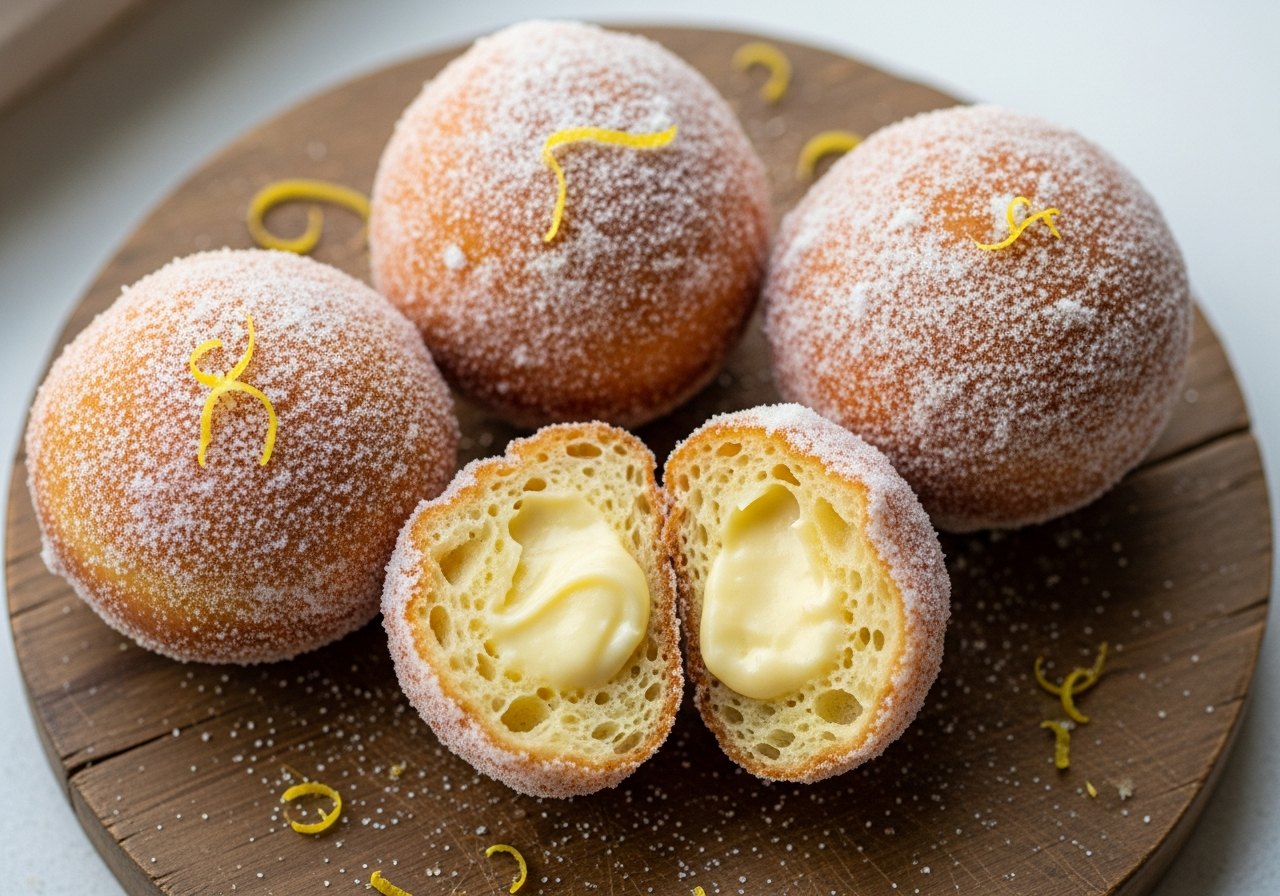
Frying dough might seem daunting, but with a few simple tricks, you'll achieve Bomboloni that are golden, light, and never greasy. The secret lies in maintaining a consistent oil temperature. Too low, and your doughnuts will absorb too much oil, becoming heavy; too high, and they'll brown too quickly on the outside while remaining raw in the centre.

Equally important is handling the dough with care. After its second rise, gently punch it down and roll it out. When cutting your rounds, try not to twist the cutter, as this can seal the edges and inhibit a beautiful rise. Carefully placing them into the hot oil and turning them just once ensures an even cook and that characteristic plump Bomboloni shape.
The Art of Frying Dough

Choosing Your Filling

While Bomboloni are utterly delicious plain, the traditional Italian way is to fill them, with crema pasticcera (custard) being the quintessential choice. A rich, smooth vanilla custard perfectly complements the sweet dough. However, don't shy away from experimenting with other fillings like luscious chocolate cream, hazelnut spread, or even a tangy fruit jam for a delightful contrast.

When it comes to filling, ensure your chosen cream or jam is smooth and not too runny, to prevent it from escaping. A piping bag fitted with a long, thin plain nozzle is your best friend here. Insert the nozzle into the side of the cooled Bombolone and gently squeeze until you feel it plump up. Remember, it's about adding a burst of flavour without overwhelming the delicate doughnut.

Nonna's tip

Maintain a consistent oil temperature of 170°C (340°F) to ensure your bomboloni cook evenly and achieve that perfect golden hue without absorbing too much oil. If the oil is too hot, they will brown too quickly outside and remain raw inside; too cool, and they will become greasy.
Recipe Card

Bomboloni (Italian Doughnuts)

These classic Italian Bomboloni are soft, sweet yeast doughnuts, deep-fried to golden perfection, and traditionally filled with creamy custard or fruit jam before being dusted with caster sugar.

Prep
30 min
Cook
15 min
Chill
0 min
Total
2 hr 45 min
Serves
10
Level
Medium
Ingredients
  • 300g (2 1/2 cups) strong white bread flour, plus extra for dusting
  • 50g (1/4 cup) granulated sugar, plus extra for coating
  • 7g (2 1/4 tsp) fast-action dried yeast
  • 120ml (1/2 cup) lukewarm milk
  • 1 large egg
  • 40g (2 1/2 tbsp) unsalted butter, softened
  • 1 tsp lemon zest
  • Pinch of salt
  • 1 litre (4 cups) vegetable oil, for deep frying
  • 200g (3/4 cup) vanilla custard or fruit jam, for filling (optional)
Method
  1. Combine the lukewarm milk, yeast, and a tablespoon of the granulated sugar in a small bowl, then let it bloom for 5-10 minutes until a foamy layer appears on top.

  2. In a large mixing bowl, whisk together the flour, remaining granulated sugar, salt, and lemon zest; create a well in the centre and pour in the bloomed yeast mixture and the egg.

  3. Mix everything with a wooden spoon or your hands until a shaggy dough forms, then turn it out onto a lightly floured surface and knead for 8-10 minutes, gradually incorporating the softened butter until the dough is smooth and elastic.

  4. Place the dough in a lightly oiled bowl, cover it with cling film or a damp tea towel, and let it rise in a warm place for 1.5-2 hours, or until it has doubled in size.

  5. Gently punch down the risen dough to release the air, then roll it out to an even thickness of about 1.5 cm (1/2 inch) on a lightly floured surface, and use a 7-8 cm (3-inch) round cutter to cut out the bomboloni.

  6. Heat the vegetable oil in a large deep pan or pot to 170°C (340°F); carefully lower the bomboloni into the hot oil in batches, ensuring not to overcrowd the pan, and fry for 2-3 minutes per side until golden brown and cooked through.

  7. Using a slotted spoon, remove the fried bomboloni and place them on a tray lined with paper towels to drain any excess oil.

  8. While the bomboloni are still warm, roll them generously in caster sugar until fully coated.

  9. Once cooled slightly, fill the bomboloni by inserting a piping bag fitted with a plain nozzle into the side and injecting your chosen custard or jam.

Nutrition (per serving)
320
Calories
18 g
Fat
30 g
Carbs
6 g
Protein
15 g
Sugar
Notes
  • Bomboloni are truly at their best when enjoyed fresh on the day they are made.
  • Store any unfilled bomboloni in an airtight container at room temperature for up to one day; fill them just before serving for optimal freshness and texture.
Good to know

Frequently asked

Why are my bomboloni greasy?

The oil temperature was likely too low, causing the dough to absorb excess oil. Ensure your oil is consistently at 170°C (340°F) for proper frying.

My bomboloni didn't rise properly. What went wrong?

This could be due to inactive yeast (always check the expiry date), milk that was either too hot or too cold, or a cold environment for the dough to prove in.

Can I bake bomboloni instead of frying?

While you can bake them, they won't achieve the characteristic light, airy texture and rich flavour that comes from traditional deep-frying. For an authentic Bomboloni experience, frying is key.