Small Bakes

Sicilian Cannoli

Crisp, blistered shells and a sweet ricotta filling piped to order — the pride of Sicily, made properly at home.

Sicilian Cannoli
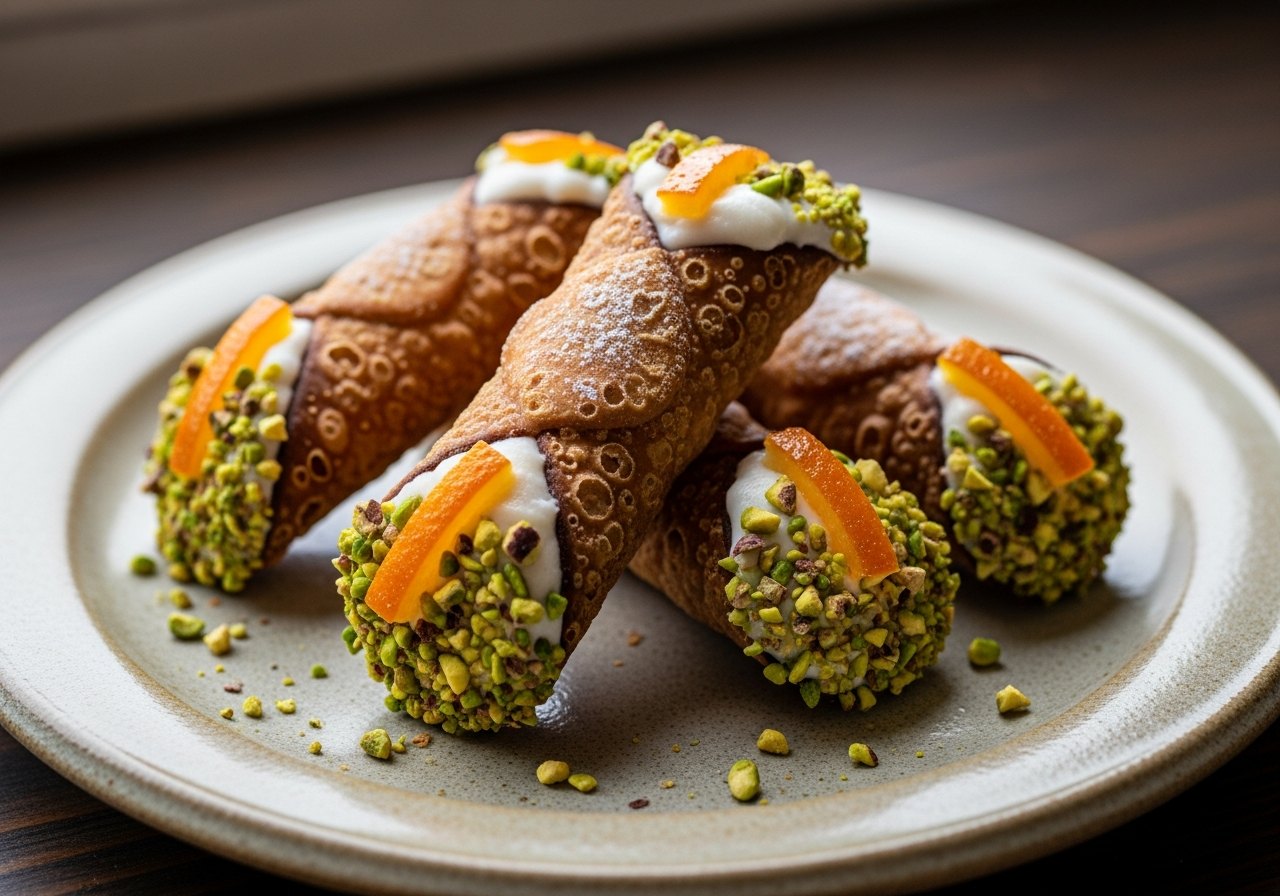
Sicilian Cannoli — made and photographed at home.

There is a rule in Sicily: a cannolo is filled at the moment you order it, never before. The whole magic lies in the contrast between the shatteringly crisp fried shell and the cool, sweet ricotta cream within. Fill them too early and the shell goes soft, and a soft cannolo is a sad thing indeed.

Making cannoli at home is a genuine project, but every step is achievable in an ordinary kitchen. The dough is enriched with wine and a little vinegar for those signature blisters, and the filling is nothing more than well-drained ricotta, sugar and whatever you love — pistachios, candied orange, chocolate.

The shell: blisters and bubbles

A good cannolo shell is covered in tiny blisters and crackles when you bite it. Two things create that: a splash of dry white wine or Marsala in the dough, and frying at the right temperature. The wine reacts in the hot oil to throw up those characteristic bubbles.

Roll the dough as thin as you dare — you should almost see through it. Thick shells fry up hard and bready rather than light and glassy. A pasta machine makes this far easier than a rolling pin.

The shell: blisters and bubbles
Wrap around metal tubes and fry until deep gold and blistered.

The filling: ricotta, drained twice

Sicilian filling is traditionally made with sheep's milk ricotta, prized for its richness. Whatever you use, drain it ruthlessly — overnight in a sieve — then beat it smooth with icing sugar. Some pass it through a sieve twice for a silken finish.

Fold in mini chocolate chips, chopped pistachio or candied orange, then pipe it into the shells from both ends so every bite is full. Dip the exposed ends in more pistachio and dust with icing sugar.

Nonna's tip

Brush a little melted chocolate inside each shell before filling and let it set. It forms a waterproof seal that keeps the shells crisp for an hour or two longer.
Recipe Card

Sicilian Cannoli

Crisp homemade Sicilian cannoli shells fried until blistered, filled with sweet drained-ricotta cream, pistachio and candied orange.

Prep
40 min
Cook
20 min
Chill
1 hr
Total
2 hr
Serves
16
Level
Medium
Ingredients
  • 250 g (2 cups) plain flour
  • 2 tbsp caster sugar
  • 1 tbsp cocoa powder
  • 30 g cold butter, cubed
  • 1 egg yolk
  • 90 ml dry white wine or Marsala
  • 1 tsp white wine vinegar
  • Pinch of salt
  • Neutral oil, for deep frying
  • 1 egg white, for sealing
  • 500 g (2 cups) ricotta, drained overnight
  • 120 g (1 cup) icing sugar, plus extra to dust
  • 50 g chopped pistachios
  • 50 g candied orange or mini chocolate chips
Method
  1. Mix the flour, sugar, cocoa and salt. Rub in the butter, then add the egg yolk, wine and vinegar. Bring together into a firm dough and knead for 8 to 10 minutes until smooth. Wrap and rest for 1 hour.

  2. Meanwhile, beat the drained ricotta with the icing sugar until smooth and creamy. Fold in the pistachios and candied orange or chocolate chips. Cover and chill.

  3. Roll the dough very thin, about 2 mm, using a pasta machine if you have one. Cut into 9 cm circles and wrap each loosely around a metal cannoli tube, sealing the overlap with a dab of egg white.

  4. Heat oil to 180C (355F). Fry the shells on their tubes, two or three at a time, for 1 to 2 minutes until deep golden and blistered. Drain on paper.

  5. When cool enough to handle, gently slide the shells off the tubes. Let them cool completely before filling.

  6. Spoon the ricotta cream into a piping bag and fill each shell generously from both ends.

  7. Dip the exposed ends in chopped pistachios, dust with icing sugar and serve immediately.

Nutrition (per serving)
230
Calories
11 g
Fat
26 g
Carbs
6 g
Protein
14 g
Sugar
Notes
  • Fill cannoli only when ready to serve to keep the shells crisp.
  • Unfilled shells keep in an airtight tin for up to a week. The filling keeps 2 days in the fridge.
Good to know

Frequently asked

Can I make cannoli without metal tubes?

Metal cannoli tubes give the classic shape and let you fry the shells evenly. In a pinch, clean wooden dowels wrapped in foil can work, but inexpensive metal tubes are worth buying if you plan to make them more than once.

Why did my shells turn out hard?

Usually the dough was rolled too thick or the oil was not hot enough. Roll until almost translucent and keep the oil at a steady 180C for light, glassy shells.

How do I stop cannoli going soggy?

Drain the ricotta thoroughly, fill at the last minute, and seal the inside of each shell with a thin layer of melted chocolate for extra insurance.