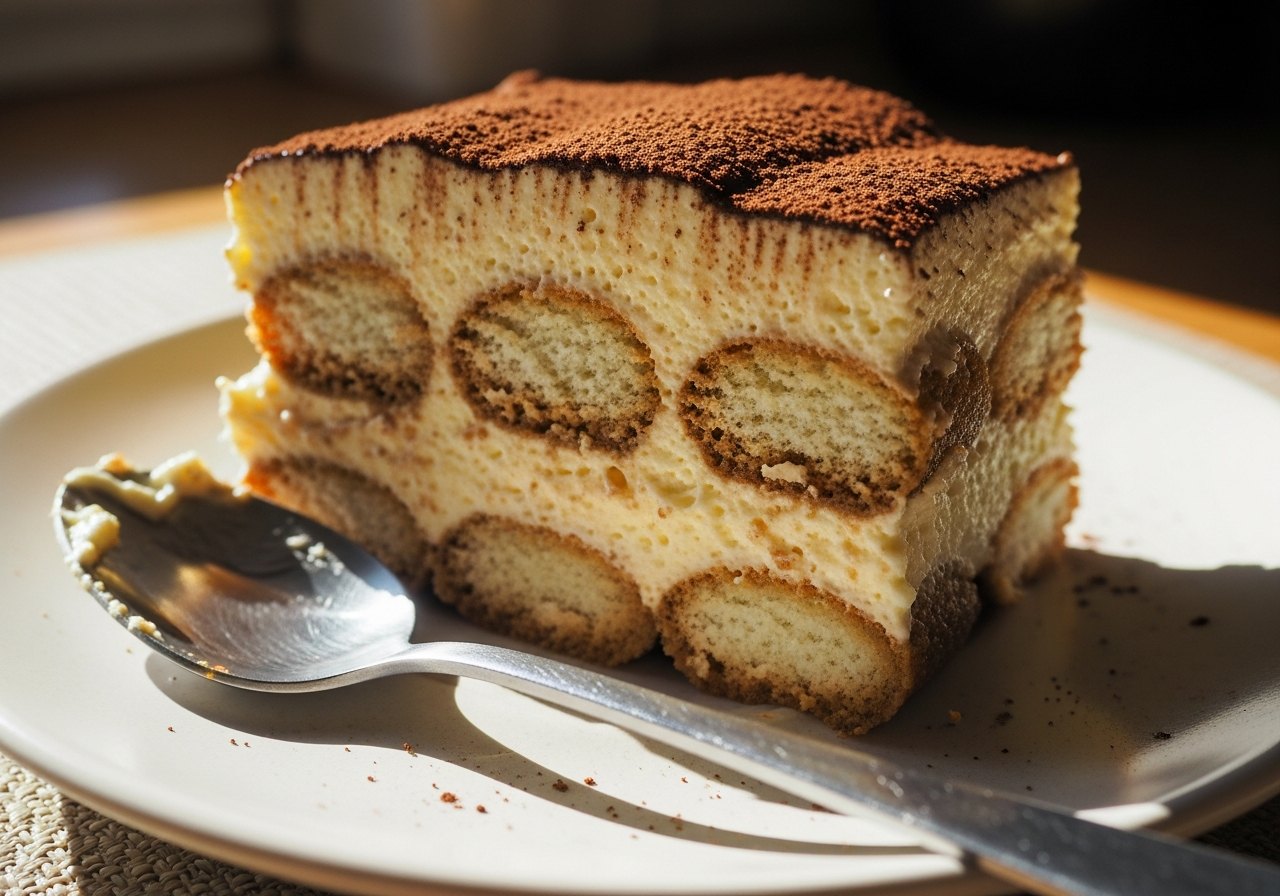
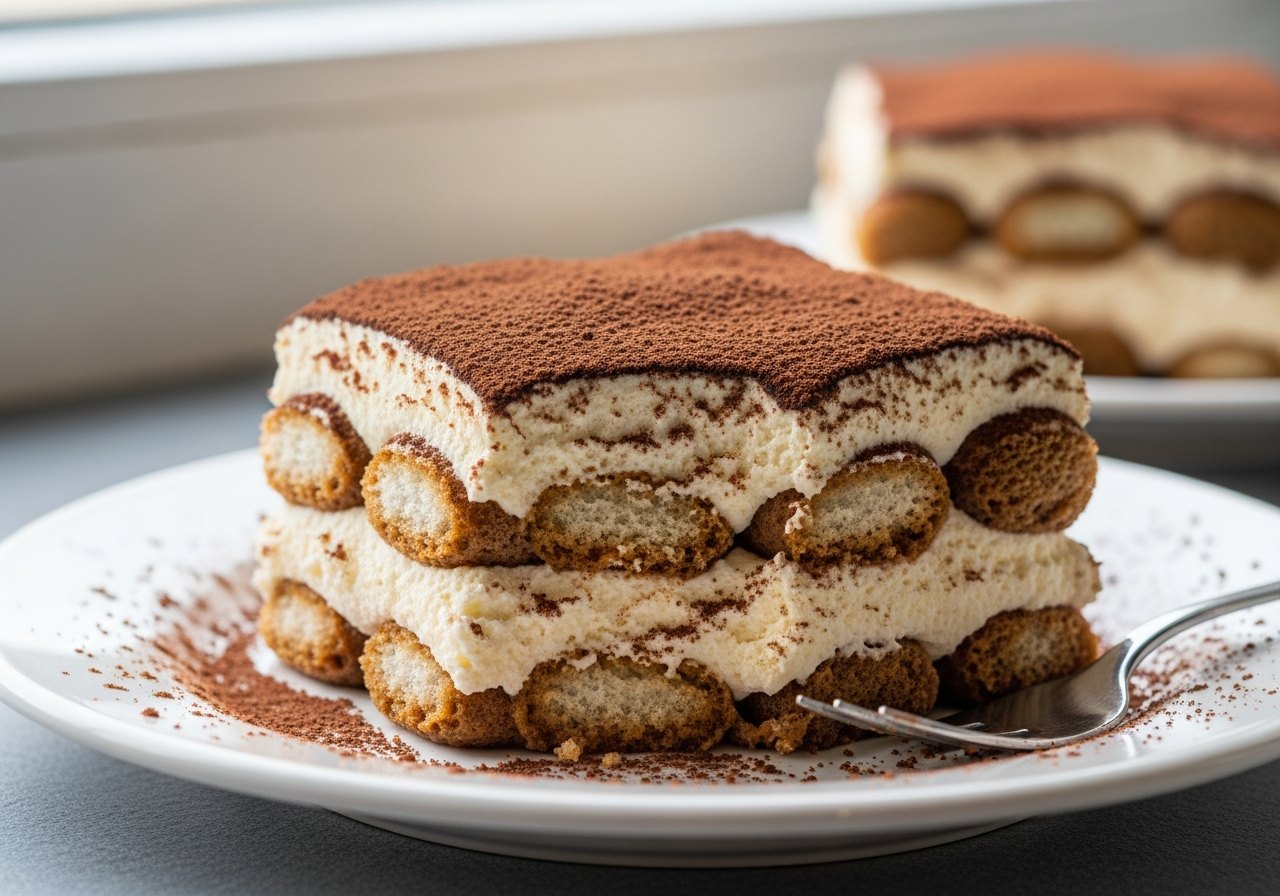
Tiramisu is the dessert that converted the world to Italian sweets, and yet most versions served abroad would make a Venetian wince. The real thing has no cream cheese, no gelatine and no whipped topping. It is nothing more than espresso-soaked ladyfingers layered with a mascarpone cream so light it barely holds its shape, finished with a veil of bitter cocoa.
The name means "pick me up" — a nod to the coffee and the sugar — and it was born in the Veneto region in the 1960s. This is the version I have made hundreds of times: stable enough to slice, soft enough to melt, and balanced so the coffee and cocoa keep all that sweetness in check.
The secret is in the eggs
A proper tiramisu cream starts with a zabaglione — egg yolks whipped with sugar over gentle heat until pale, thick and ribboning. This cooks the yolks just enough for safety and gives the cream its custardy backbone. Skip it and you get a loose, eggy mixture that weeps overnight.
Whip the whites separately to soft peaks and fold them in last. They are what turn a rich cream into something that feels like a cloud. Use the freshest eggs you can find, and have everything at room temperature before you begin.
Choosing your coffee
Use real espresso, cooled to room temperature. If you do not have a machine, a strong moka pot or even a concentrated instant espresso will work. The coffee should taste slightly too strong on its own, because the mascarpone will mellow it considerably.
Traditionally a splash of Marsala or dark rum goes into the soaking coffee. It is optional, but a tablespoon adds a grown-up depth that lingers. Leave it out entirely for a family-friendly version.
Nonna's tip
Make tiramisu a full day ahead. It needs at least six hours to set, but it is genuinely better on day two once the biscuits have fully surrendered to the cream and the flavours have married.